Best Seatbelt Cover Materials: Comfort, Heat & Care
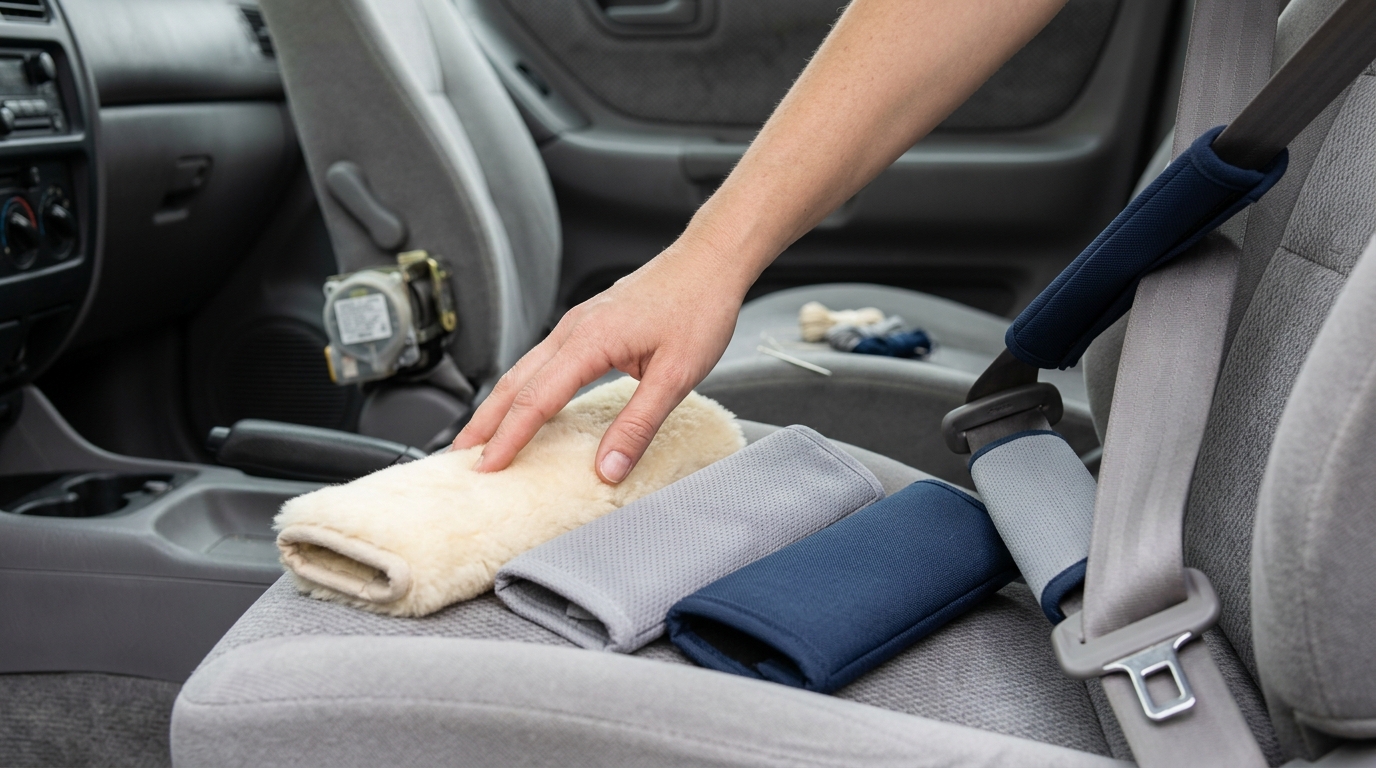
What’s the best material for seatbelt covers?
The best material for seatbelt covers depends on what matters most in daily driving: softness against the neck, heat control, easy cleaning, or long-term durability. For most drivers who want a comfortable, low-fuss upgrade, microfiber and soft polyester blends are top picks because they feel smooth, don’t irritate skin easily, and clean up well with basic spot treatment.
If comfort is the priority, plush fabrics like fleece or velour-style polyester can feel extra cozy, especially on longer trips. Just keep in mind that very fluffy materials can trap heat in warm weather and may show wear faster if they’re constantly rubbed by the belt edge.
Best choices by need
Everyday comfort + easy care: Microfiber or polyester blends. They’re typically soft, affordable, and less likely to hold odors. Many versions are machine-washable (always follow the label to avoid shrinking or matting).
Hot climates: Breathable cotton or cotton blends. Cotton tends to feel cooler and wick moisture better than plush synthetics, though it can stain more easily if you frequently use sunscreen or hair products.
Premium look and durability: Neoprene or high-quality faux leather (PU). Neoprene handles sweat and spills well, while PU can look sleek and wipe clean quickly. The trade-off is that less-breathable materials may feel warmer against bare skin.
Sensitive skin: Smooth microfiber or brushed polyester with minimal seams. Look for a soft inner lining and avoid rough edging that could rub the neck.
What to avoid
Skip stiff, scratchy fabrics or covers with bulky, poorly finished seams. Also avoid anything that’s so thick it makes the belt sit awkwardly or prevents the belt from retracting smoothly.
For a deeper breakdown of materials, comfort factors, and shopping tips, visit https://perfectbuysgallery.shop/what-s-the-best-material-for-seatbelt-covers/.
FAQ
Do seatbelt covers affect safety?
They can if they interfere with the belt lying flat across the body, block smooth retraction, or add too much bulk. Choose a slim cover that stays in place and doesn’t change how the belt fits.









Leave a comment