Premium Anti-Slip Leather Steering Wheel Cover (Universal Fit)

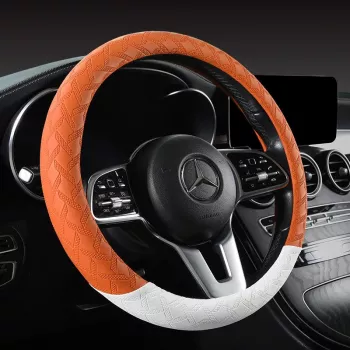
Universal Anti-Slip Steering Wheel Cover – Premium Leather Comfort and Control
A steering wheel cover can improve grip, reduce hand fatigue on long drives, and protect the factory wheel from wear and fading. This premium leather, anti-slip cover is designed to fit a wide range of vehicles—including many Toyota, Ford, Honda, and Mercedes-Benz models—while adding a clean, upscale look to the cabin. For drivers who spend real time behind the wheel (daily commuting, rideshare, highway mileage, or tight city parking), a better steering feel is one of those small upgrades that’s noticeable every single day.
What Changes When a Steering Wheel Has Better Grip
Grip affects more than comfort—it impacts consistency. A wheel that feels secure helps hands stay planted during turning, lane changes, and quick corrections, especially when palms get sweaty in warm weather or after a long drive.
- More consistent hand placement during turns and lane changes, especially when palms get sweaty.
- Less “slip” when making quick steering inputs in city driving or during parking maneuvers.
- Improved comfort for daily commutes by softening the feel of a hard or worn factory wheel.
- Added protection against UV exposure, skin oils, and abrasion that can make OEM wheels glossy or cracked over time.
It’s also a subtle safety-minded improvement: maintaining control and reducing distractions matters. For guidance on staying focused and minimizing risky driving behaviors, see the NHTSA distracted driving resources.
Premium Leather Feel Without the High-Maintenance Routine
A leather-style steering wheel cover is often chosen for how it looks and how it feels. The goal is a surface that’s refined and comfortable, without being overly tacky or requiring constant upkeep.
- Leather-style surface provides a refined look that pairs well with both cloth and leather interiors.
- Anti-slip texture helps keep hands stable without needing an overly “sticky” material.
- Helps cover existing wear such as shine spots, minor scuffs, or discoloration on the original wheel.
- A good match for drivers who want a simple interior upgrade that is visible and practical every day.
If your factory wheel has started to look glossy (from skin oils and constant contact) or feels too hard in colder months, a cover can add a more comfortable touch point while visually “resetting” the driver’s area.
Fit and Compatibility: Getting the Right Size Before Ordering
Fit is everything with steering wheel covers. A cover that’s too loose can twist; one that’s too tight can be difficult to install and may not seat evenly. Before ordering, take a quick measurement and note any unusual wheel shapes.
- Measure the outer diameter of the steering wheel (edge-to-edge across the center) before purchase.
- Check whether the wheel is noticeably thick, flat-bottom, or has pronounced grips—these shapes can affect installation and final fit.
- If the vehicle has a heated steering wheel, expect a slight reduction in perceived heat transfer through any cover.
- For vehicles across Toyota, Ford, Honda, and Mercedes-Benz lineups, confirm the wheel diameter range listed on the product page and compare to the measurement.
| Check | How to confirm | Why it matters |
|---|---|---|
| Wheel diameter | Measure across the wheel from outer edge to outer edge | Determines whether the cover can stretch and sit tight |
| Wheel thickness | Compare feel to a standard wheel; look for bulky grips | Impacts how secure the cover feels after installation |
| Wheel shape | Round vs. flat-bottom or sculpted grips | Some shapes may leave small gaps or take longer to seat |
| Factory material condition | Smooth, cracked, glossy, or peeling areas | A cover can protect and hide wear, but severe damage may still show through |
Installation: A Secure Fit That Doesn’t Twist
Most “slipping” complaints come from either sizing issues or incomplete seating during installation. A snug, evenly stretched cover should feel integrated—like it belongs on the wheel.
- Warm the cover slightly (sunlight or a warm interior) to make it more flexible before stretching it onto the wheel.
- Start at the top of the wheel, pull down evenly, and work side-to-side to keep the tension balanced.
- After installation, adjust until seams and texture sit evenly; test for any rotation or bunching by turning the wheel lock-to-lock while parked.
- If slipping occurs, re-seat the cover and ensure it is fully pulled over the wheel’s circumference.
Daily Use Benefits for Commuting, Highway Miles, and Parking
In colder or stormy seasons, maintaining predictable control matters. While a steering wheel cover isn’t a substitute for proper tires or cautious driving, improved hand stability can complement safe habits. AAA’s guidance on maintaining control in challenging conditions is a helpful reference: AAA winter driving tips.
Care and Cleaning to Keep the Leather Look
When to Replace a Steering Wheel Cover
Shop Interior Upgrades That Pair Well Together
- Universal Anti-Slip Steering Wheel Cover – Premium Leather for Toyota, Ford, Honda, Mercedes-Benz ($26.51)
- Universal Car Headrest Hooks for Toyota, Ford, Honda ($2.01)
- Luxury TPU Car Key Cover for Mercedes-Benz A, B, C, E, S-Class (2020+) ($2.97)
FAQ
How do you measure a steering wheel for a universal cover?
Measure the outside diameter from outer edge to outer edge across the center of the wheel, then compare it to the size range listed on the product page. Also consider thickness and whether the wheel is round or flat-bottom, since shape affects how the cover seats.
Will an anti-slip leather steering wheel cover feel bulky?
It adds a small amount of thickness, which is usually most noticeable if your factory wheel is already thick. A properly sized cover that’s evenly seated tends to feel natural in the hands rather than oversized.
Can a steering wheel cover slip while driving?
A correctly sized cover that’s fully pulled over the wheel should not rotate. If it twists, re-seat it and confirm the wheel diameter matches the cover’s fit range.









Leave a comment